Showing posts with label Diversity. Show all posts

Monday, July 13, 2026

Reposting about Widerstand Consulting Resources Being in the Public Domain

Widerstand logo composed of blue curved lines
I am posting again about Widerstand Consulting's anti-racism resources being available in the public domain.  We are doing this so that others can benefit from our work as we close the organization. All of these resources can be used by any organization or group as they work to become more anti-racist. These resources (12 in total) are available in the Internet Archive and in this Google Drive. You can download what interests you. Please tell your colleagues about this and encourage them to use our materials.

What do I mean that these can be used by anyone? We have placed a license on each of the documents which denotes that they are now part of the public domain. This enables you to distribute, remix, adapt, and build upon the material in any medium or format, with no conditions. We have done this so what we have learned will continue.

If you are unaware of what the Internet Archive is, it was begun in 1996 as a 501(c)(3) non-profit that is a digital library of Internet sites and other cultural artifacts in digital form. The Internet Archive contains webpages, newspapers, audio, video, books, images, and software programs. Like a paper library, the Internet Archive provides free access to researchers, historians, scholars, people with print disabilities, and the general public. Today the Internet Archive contains more than 1 trillion items, which now includes materials from Widerstand.

I have been involved with Widerstand for several years and am disheartened to see that the focus on DEIA has decreased in the U.S. as priorities have shifted. This work does have its ebb and flows, and so I look forward to when organizations are again eager to eliminate systemic barriers in their structure. In my sadness as Widerstand closes, I am also overjoyed that our documents may help others continue this work. May these documents become part of the building blocks for the future.

Wednesday, April 01, 2026

Widerstand Anti-racism Resources are Now in the Public Domain

Widerstand logo composed of blue curved lines
I have written a few times about my role with Widerstand Consulting, which is a non-profit [501(c)(3)] focused on helping organizations with addressing systemic barriers within their environments. Since its inception, Widerstand has worked with many organizations across the U.S. by providing training and anti-racism audits/assessments. However, over the past 18 months, shifting priorities and external pressures have led many organizations to step back from diversity, equity, inclusion, accessibility (DEIA), and anti-racism work, making it difficult for Widerstand to continue its mission. Therefore, the organization has closed.

As part of our closing procedure, we decided to place 12 of our anti-racism resources - including a resource list - in the Internet Archive. All of these resources can be used by any organization as they work to become more anti-racist. I encourage you to use this link and review what we have put in the Internet Archive. You can download what interests you. Please tell your colleagues about this and encourage them to use our materials.

What do I mean that these can be used by anyone? We have placed a license on each of the documents which denotes that they are now part of the public domain. This enables you to distribute, remix, adapt, and build upon the material in any medium or format, with no conditions. We have done this so what we have learned will continue.

If you are unaware of what the Internet Archive is, it was begun in 1996 as a 501(c)(3) non-profit that is a digital library of Internet sites and other cultural artifacts in digital form. The Internet Archive contains webpages, newspapers, audio, video, books, images, and software programs. Like a paper library, the Internet Archive provides free access to researchers, historians, scholars, people with print disabilities, and the general public. Today the Internet Archive contains more than 1 trillion items, which now includes materials from Widerstand.

I am sad that focus on DEIA has decreased in the U.S. as priorities have shifted. This work does have its ebb and flows, and so I look forward to when organizations are again eager to eliminate systemic barriers in their structure. In my sadness, I am also overjoyed that our documents may help others continue this work. May those documents become part of the building blocks for the future.

Thursday, January 02, 2025

Hello 2025! -- Looking back & looking ahead

Ai generated image of people celebrating with the words "Happy New Year" above their heads

2024 went by quickly and now we are at the start of another year. Happy New Year!  I haven't posted in a while and thought that I would provide a quick update.

Yesterday was Public Domain Day and you have likely seen news stories about it. The Morning Brew has a brief story which includes the possibility of horror movies being made with public domain works.  I hadn't considered that, but I can definitely imagine it and I expect it has already happened somewhere (perhaps memes or TicTic videos). 

By the way, Wikipedia has an interesting list of what passed into the public domain in the U.S. and in other countries. Of course, the Internet Archive (and others) have lists. Among the works now in the public domain is "Singing in the Rain" which was used in the disturbing film, "A Clockwork Orange" in 1971.

Many people are talking about the copyright and artificial intelligence (AI).  The U.S. Copyright Office is analyzing the issues around AI, but I wonder if that is moving too slowly given how AI is now all around us. Researchers at RAND have written the report, "Artificial Intelligence Impacts on Copyright Law" which I have found to be useful. 

I should say that I am not a huge user of AI, although it is being built into things that I use daily. Most times those AI "pop-ups" are annoying because I know what I am trying to do and AI is slowing me down. I have used AI intentionally to help me rewrite awkward text, but I don't do that frequently. I mostly use AI to generate images for me like the one above. In other words, I'm not an AI convert. However, I know that there are libraries experiment with AI to see how it can be of use, and that some people are true AI converts. 

I must say that I find ads for business products that use AI to be humorous because they have to state  that the products are hallucination-free. Did we ever think we would need to say that about a product we're using?

The  litigation Hachette v. Internet Archive concluded with the Second Circuit Court ruling against the Internet Archive, and the Archive deciding not to take the case to the U.S. Supreme Court. There is much that has been said and could be said about this court case. 

BTW Brewster Kahle and Kyle Courtney were interviewed by Chris Hayes during the summer (The End of Libraries as We Know Them?), which is about more than the litigation and worth listening to.  I always appreciate Kyle's perspective on libraries, copyright, and access to materials.

I need to mention the continued effort to ban materials in libraries and the push-back that is occurring on that.  For information on what has occurred, I suggest that you read EveryLibrary's report, "Wins, Warnings, and Ongoing Legislative Fights for Libraries in 2024."

While we have products being built or trained on digitized content, we will have organizations that need materials put into digital form, for example old church records. Yes, digitization is still needed. Depending on where you or your organization are in your digitization journey, consider reaching out to smaller institutions in your community and asking if they have information that needs to be preserved or if it would benefit them to have it available digitally.  Birth, death, baptism, bar/bat mitzvah, membership, or land records are all things that may still be in paper form.

My focus in 2024 continued to be on diversity, equity, inclusion, accessibility, belonging, (DEIAB) and anti-racism with Widerstand Consulting. 2024 had its challenges because of all the things happening around us (like politics). The question we are all asking is, "What will 2025 bring?"  I don't know the answer to that, but I do know that those doing DEIAB and social justice work need to be ready for whatever it is.  Personally, I believe that allies need bystander training and I hope communities will offer it.  There are many resources online about bystander training. These are a few videos that I have found useful:

One of the things I have been doing regularly is writing articles for Widerstand's monthly newsletter which is free and available to all. I'm also posting frequently to Widerstand's LinkedIn page. Please consider subscribing to our newsletter and following us on LinkedIn.

Well...that's my update! If we cross paths in 2025, please stop and say "hello!"


Wednesday, April 12, 2023

Webinar Resources: Developing Cultural Humility

Today I'm giving a webinar for the Finger Lakes Library System on cultural humility. This blog post is for them, so they have easy access to the resources I'm sharing. 

Webinar Description

New to your community is a large group of people from various cultures. When they come to the library, what happens? Are you excited? Anxious? Curious? Ready to learn? 

When we interact with library patrons, community members, and other staff, we are often moving among different cultures. Sometimes we move among various cultures without thinking about it. Other times, we recognize the cultural difference and are unsure how to bridge the divide. These interactions demonstrate the need to develop a life-long process of self-exploration and self-critique, along with a willingness to learn from others. This process, called “cultural humility,” helps us see beyond our own culture as we work to become culturally competent.   

No matter your community or library, you are working across cultures, including some that may not be apparent to you. In this webinar, we will explore what culture is and the process for developing cultural humility, while also creating a plan for expanding our knowledge of the apparent and hidden cultures in our communities.

 Pre-reads

 Presentation Resources

Tuesday, December 06, 2022

Resources from "Starting from Where You Are: Becoming Anti-isms"

Friends on a bench. Microsoft stock photo.
Today I'm giving a webinar for the Central NY Library Resources Council and this post contains the resource list for the participants. (They will also receive a copy from CLRC.)

Description: Steps towards becoming anti-racist include developing an awareness of your own culture, cultivating cultural humility, and recognizing that it is a never-ending process that is not a straight line. This interactive session will have participants thinking about their own cultural backgrounds and the cultures of the community members our libraries serve. Resources for continuing this journey towards being anti-racist and anti-isms will be provided.

Learning Objectives: After this webinar, participants will be able to:

  • Engage in self-growth activities that help build an environment of acceptance and belonging.
  • Be involved in discussions about diversity, equity, and inclusion and their impact on belonging.
  • Take meaningful steps to eliminate the -isms around them.
Resources: These are listed as shown in the webinar:
 

Monday, August 22, 2022

Podcast Interview: Making Libraries Welcoming Spaces

Julie Edwards and I were interviewed by Christopher Kenneally for a Velosity of Content podcast episode entitled, "Making Libraries Welcoming Spaces." The 24-minute episode is available on the VOC website and wherever you get your podcasts. A transcript is also available.

Julie and I are both librarians, who interact with the profession in many different ways. However, what has brought us together is our work with Widerstand Consulting, where we are involved in anti-racism work. Julie, who is White, and I are part of a multiracial team for Widerstand. We bring our knowledge, passion, and patience to the work of helping organizations understand how to become more anti-racist. Becoming anti-racist is not something a person or organization does overnight, rather it can be a winding path that takes more time and intention that one might desire. And it is a path that can include both moving forward and moving backward, because"fumbles" will occur.

Why are libraries working on becoming anti-racist? As Julie said in the interview, "There is a real interest in making libraries more welcoming to students and deconstructing some of these structures that have been set in place that aren’t serving the students or the librarians anymore." We could not mention in 24 minutes all of the areas which libraries are tackling, so we didn't get into collection development or how materials in a library are catalogued. However, both of those areas need to change to become more inclusive, less governed by White ideals, and more open to all those who need to use them. Yes, so many areas that need focus from staff hiring, to development of library services, to marketing, to....everything!

Below is a 2-minute video preview to the 24-minute audio episode. Yes, do listen to the entire episode. If it raises questions, please post them as questions here  (as comments) or reach out to me. If your curious about Widerstand, you can find information about them on their website. 

Addendum (8/22, 10:45 a.m.): The digital journal, University Business, has published an article, How to create a campus library that welcomes everyone by Christopher Kenneally, which is related to the podcast.

Thursday, August 11, 2022

CLA: Diversity, Equity, Inclusion, and Justice for Library Advocacy

On Aug. 10, I was part of a panel for the California Library Association Ursula Meyer Advocacy Fund Training "Workshop on Diversity, Equity, Inclusion, and Justice for Library Advocacy", which was a 120-minute online event. The session has been archived on YouTube. Given the interest in the event, I'm posting info about it here, along with the video and resources mentioned during the session.

Description: 

Diversity, equity, inclusion, and justice remain critically important elements of our library advocacy efforts; they also are interwoven themes with which we struggle within our organizations and within the communities we serve. This highly-interactive, discussion-focused session, featuring a panel of library advocates, will explore the hopes and challenges that drive advocacy, unconscious bias, and ways to be effective in fostering diversity, equity, inclusion, and justice.

Panelists: 

  • Jené Brown, Director of Emerging Technologies and Collections as well as Racial Equity Officer for the Los Angeles Public Library; also serving as California Library Association President.
  • Jill Hurst-Wahl is a member of Widerstand Consulting, which does anti-racism work with many organizations, including libraries. In her own consulting practice (Hurst Associates, Ltd.), she works at the intersection of information, technology, and people, which includes creating inclusive systems and spaces. She is professor emerita at Syracuse University's iSchool. 
  • Essraa Nawar, Development Librarian, DEI Program Coordinator, and Chair of the Arts, Exhibits, and Events Committee at Chapman University; has also been a TDx speaker.

Moderator:

  • Paul Signorelli, a writer, trainer, presenter, and consultant serving as Library Advocacy Training Project Manager for CLA; Storyteller in Residence for the Arizona State University ShapingEDU community; and a board member for the UCLA Daily Bruin Alumni Network.

Resources Shared in Chat:

Thursday, May 19, 2022

Friday, April 29, 2022

Resources for April 29 AIIP presentation: Moving Beyond Hope

Person sitting in front of a laptop

Today I'm giving the Roger Summit Lecture Award lecture at the Association of Independent Information Professionals (AIIP) Annual Conference. My topic is "Moving Beyond Hope" and I'm focusing on diversity, equity, inclusion, accessibility, acceptance, and belonging. Below are links to specific Digitization 101 blog posts and other resources I want the group to have. 

Blog Posts

Other Resources

Friday, January 28, 2022

Resources for SLA Kentucky Chapter event, Jan. 28

Person sitting in front of a laptop

Today I'm speaking at a virtual event by the Special Libraries Association's Kentucky Chapter on "Breaking the White-ness of the Profession." (Registration) Below are resources I want this group to have (and you can use them too). It is not meant to be a comprehensive list, but rather some starting points.

Resources Mentioned


Additional Resources


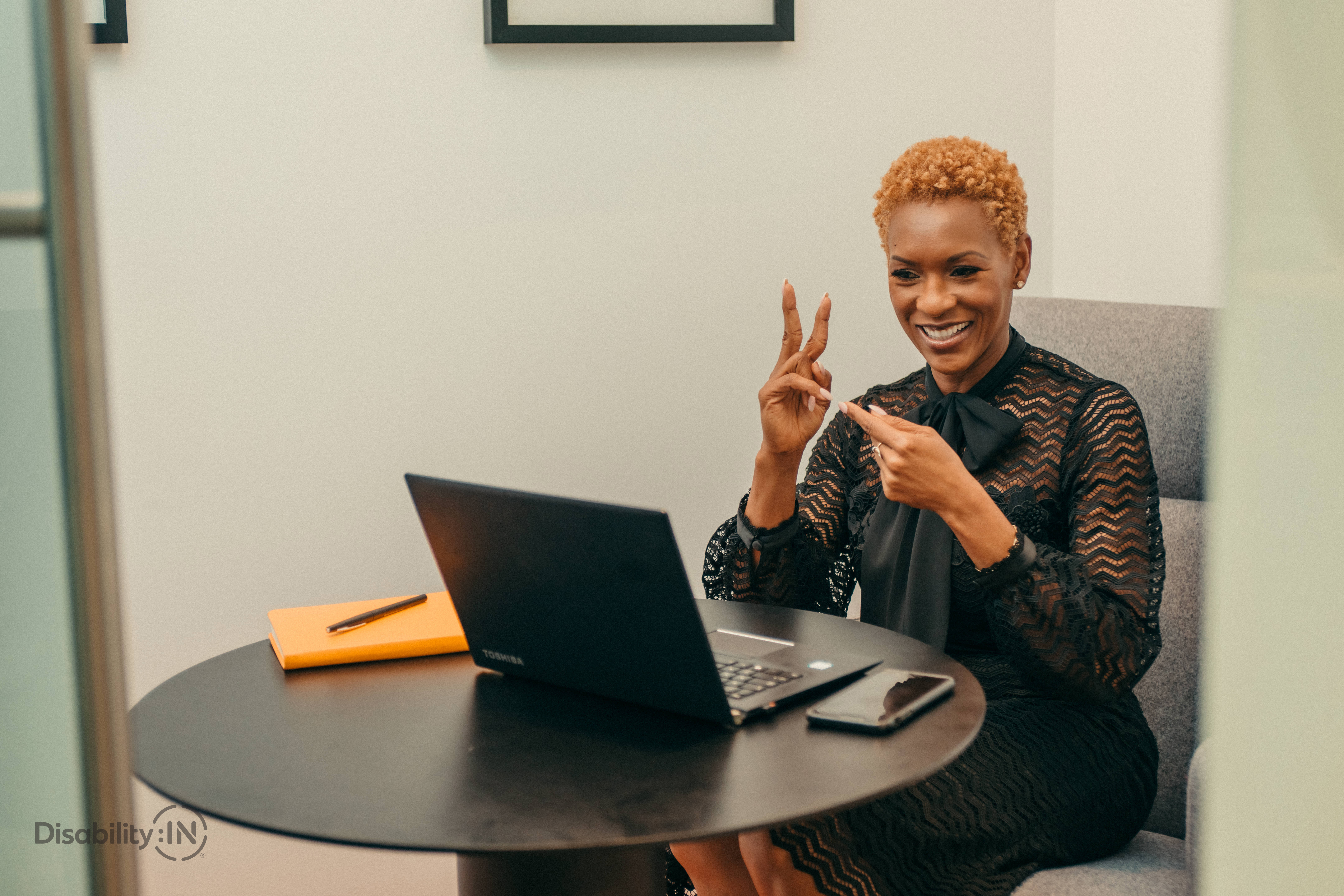
Diverse Images


We need to see diversity in the images we use. Here are some resources to get you started.


The image above is from Disability:IN and carries a CC BY-ND 4.0 license.

Addendum - Resources mentioned by webinar participants:

Friday, December 31, 2021

2021 Year in Review: What Doesn't Fit into a Neat Category

Vaccinate New York logo

Similar to what happened in 2020, much of the conversation this year was dominated by COVID. Even when we were trying to not talk about COVID, we talked about COVID. It impacted everything we did. Everything. But there is one thing it didn't touch...

T is for Training

T is for Training is a podcast started in 2008 by Maurice Coleman. It's recorded through TalkShoe, which means we're not in the same location. COVID didn't affect the podcast, which is good because we celebrated our 300th episode! (Actually, there have been special episodes, so more than 300, but who's counting.)

T - as we often call it - has changed over the years, because nothing can stay the same. The conversations may have a theme or a special guest to focus us. We've also had free-form conversations. There is always laughter and we always learn something new about training-teaching-learning.

I got involved in T on episode 3 (Oct. 2008) and became its blog editor in May 2013.  Among the regulars are people who contribute show topics, arrange for guests to be interviewed, and ensure that the conversation keeps flowing. The important thing is that whomever shows up - and yes, you could show up! - is involved in the conversation and is always welcome to come back.

This year (2020), we've had a number of guests on the show who talked about assessment of learning, gamification, having impactful learning elements, creating space and grace, black swan events, and much more. T is for Training is available on most podcast platforms, so it these topics are of interest to you, give them a listen. Links to the recordings are also in the T blog posts.

Black woman with laptop sitting in front of a bookcase

Diversifying Library Staff

I wrote a series with this title in 2020 and then added a fifth post in 2021. These posts are among the most read posts in this blog. And diversifying the profession is always in my thoughts. Sadly some people see the barriers that exist, but then don't see how to eliminate them. I'm always trying to find ways of broadening their thinking, but it's not easy especially when I see the doors to their thoughts are already closed.

Besides these posts and many informal conversations, I did a session for the ALA Librarian Education Reform Discussion Group in March on this topic. In 2022, I'm giving a webinar for the SLA Kentucky Community Student Speaker Series on "Breaking the White-ness of the Profession," which I hope will be more of a discussion than a one-way conversation.
 
Did COVID impact the diversity in our profession? I think we'll need to see employment and graduate program statistics, for example, to know the answer.

SLA's John Cotton Dana Award

I would be remiss if I didn't hip-hip-hurrah on this last day of 2021 my personal good news from this summer. It still feels unreal. I am thankful that I have been able to give back to the profession as much as I have. I'm incredibly thankful for those before me, who taught me what being a member of this profession meant and encouraged me to be an active participant. 

By the way, in normal times this award would have been given in person. Because of COVID, the ceremony was online. That meant that friends and family could easily attend, which was awesome!

Saved Quotes

After attending the Joint Conference of Librarians of Color in 2018, I've kept a bullet journal. I've used each journal a bit differently and this year incorporated space to capture quotes. I shouldn't be the only person to see them, so here they are:

  • Move at the pace of trust.
  • The obstacle is the path.
  • Life's journey is twisted.
  • Justice is what love looks like in public. - Dr. Cornel West
  • What we know may make us experts, but whom we serve makes us noble. It is not in your insight and expertise we find the true measure of worth for a librarian, lawyer, doctor, or teacher. It is in the service of the communities we serve. - Dave Lankes, The Boring Patient
  • It may be true that the law cannot make a man love me, but it can keep him from lynching me, and I think that's pretty important. - Rev. Dr. Martin Luther King, Jr.

Know someone who should subscribe to Digitization 101?

Of course, you do! If you receive Digitization 101 in email, forward it to them. There is a link for subscribing at the bottom of each email message. If you're reading this online, you - and your colleagues - can subscribe through this form.

Finally...

I hope that you have found things in 2021 which brought you great joy. May 2022 bring us all good health and happiness. Happy New Year!

Wednesday, March 10, 2021

The Struggle to Diversify Library Staff, part 5

Black woman with laptop sitting in front of a bookcase
Yesterday, the ALA group on Librarian Education Reform held its March meeting. This group has no formal standing in terms of changing library and information science education; instead it wants to spark conversations around what reforms could occur. The monthly meetings are a way to disseminate information and engage in conversations around specific topics. This month I was the speaker and talked about "The Struggle to Diversify Library Staff." At the bottom of this post are links to my four blog posts on this topic from fall 2020.

I am not going to try to summarize the entire session, but do want to pull out some thoughts on the systematic ways library organizations limit their diversity.

Before I get to that, if you have not seen the movie Hidden Figures, I encourage you to watch this short scene and what happens in the public library. We think of libraries as being welcoming places. We think that we can recruit diverse members of our community, who visit our libraries, to become librarians. But are they having positive experiences?

Okay...so how are we limiting diversity in our libraries?

  • The barriers to obtaining as MSLIS degree have already been documented, including the cost, the fact that it is a master's degree, the application requirements, etc.
  • Some of the barriers to obtaining an MSLIS are there because of various accrediting bodies and their impact on universities. Accrediting bodies have more impact on our colleges and universities than most people realize. [By the way, because of my work experiences, I understand accreditation and can both defend it and criticize it.]
  • In the hiring process, bias may be built in. Read "Types of Hiring Biases and How to Reduce Them."
  • Libraries may search for someone who has an MSLIS degree rather than someone who has the knowledge, skills, and abilities (KSA) to do the job. Focusing on the latter might allows libraries to hire candidates with more diverse backgrounds, including racial, cultural, thought, ability, and language.
  • People tend to hire people like themselves and promote people who are like themselves. The latter can eliminate diverse candidates from higher ranks in the organization.
  • Board of trustees for public and system libraries have various ways of bringing on new members. Depending on their charters, new members may be appointed by the local government, voted on by the community, or just be volunteers who are interested in the library. All of these ways can limit diversity on a library board of trustees, yet that board should reflect its community.
  • State laws set rules for who can be a director of a public library.  In New York State, for example, whether the library director is required to have an MSLIS degree is determined by the population of the community. While people from diverse backgrounds, who do not have an MSLIS, apply for positions in smaller communities? Does the need for an MSLIS - and likely years of experience - limit the diversity of applicants for director positions in larger communities?
  • If the public library is governed by civil service, those rules may specify what knowledge, skills, and abilities are needed for specific ranks (e.g., Librarian I or Librarian II). That can limit diversity, especially if the MSLIS degree is required.

Those are the things that emerged during yesterday's conversation and I'm sure there are more. I approached the conversation without using the phrase "structural racism", but clearly our structures are having a negative impact on diversity. For example, I doubt that municipalities think of how they create their boards of trustees as being a part of structural racism, yet the structure does limit who will become a trustee. 

If you have thoughts about this, I hope you'll leave a comment on this post. If you are interested in joining the conversation on librarian education reform, join the Facebook group. If you are interested and also a member of ALA, you can join the ALA Connect group for this.

Previous Blog Posts


Addendum (3/10/2021, 2:40 p.m.): Thanks to ALA for highlighting this article in its Library Worklife newsletter. The article is "Is Hiring For Culture Fit Perpetuating Bias?" from Forbes.

Addendum (03/15/2021): The T is for Training podcast focused on this topic last week. Thanks to my T colleagues for discussing this with me!  Here are links to the 63-minute podcast and show notes. The podcast is also available on iTunes and on other podcast delivery services.


Thursday, December 31, 2020

Wrapping Up 2020: A Pandemic Influenced Year

Librarians Threaten IgnoranceThis has been quite a year, which will be reflected in this look back on 2020. 

Diversity, Equity and Inclusion

Those three words became more important this year. The library and information professions were already examining themselves and how to become more diverse in terms of people within the professions, content, programs, etc. We need and want to be more representative of the communities we serve. We need to include all voices. This is an ongoing struggle and one in which every ally needs to remain vocal and active. We cannot leave this work to other people. 

In October, I wrote four posts on the struggle to diversify library staff, which have been widely shared and I think have helped to inform some conversations. If you are interested in increasing the diversity of your staff - whether your in a library or not - I encourage you to read these posts. 

By the way,  many people read the first post with fewer reading the remaining ones. Yet it is parts 2 and 3 which provides ideas for improving the situation.  (I think part 3 offers a radical idea.)

Racism in the Profession

In November, an article pointed to someone in the library and information profession as being a member of a right wing extremist group. This led to a lot of chatter on Facebook and in other places about the values of the library profession and how this person did not seem to have those values. However, the truth is that the profession contains a breadth of personal values and opinions, some of which are at odds with the values practitioners believe the profession has.  

This is an area where we all need to listen to those who have been - and continue to be marginalized in the profession. After that listening, we all need to think deeply about the changes that need to be made, and then make them.

I encourage you to read the ALA's Code of Ethics and consider how that code is helping or hindering us as we try to become more inclusive.  I also encourage you to read "This Is Who We Are" by Fobazi M. Ettarh.

If you head a library, look at your meeting room policy and consider if they would allow racist or extremist groups to use a room. Is that what you want?  Then look at your collection development policy. Does it support the inclusion of racist materials into your collection?  Is that what you want? You may need to update your policies. If you want racists to use your meeting rooms and be reflected in your collection, then you need to think about what that means to your community and likely you should document your rationale and decision. Finally, start a conversation with your staff about the values of your library, as well as about diversity, equity and inclusion.  Make this a long-term conversation. You will not be able to surface concerns or problems - or create solutions - in just a few sessions. You and your staff will need to get comfortable with each other and with the conversation, before people are willing to really open up. Everyone will need to see that conversation as safe space for all opinions.

BTW I have purposely not included links to articles, etc. about the LIS person who is associated - loosely or tightly - with a right wing extremist group. Why? Because this is not about scrutinizing one person, but about looking at the entire profession. 

My Most Shared Facebook Post

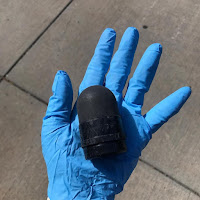
Rubber bullet

Much of the conversation around racism in 2020 was due to the Black Lives Matter protests. After a protest in Syracuse in May, a colleague helped pick up the debris and found a "rubber bullet." The term rubber bullet is used to describe a range of projectiles of varying sizes, including large ones that are used on our city streets. With permission, I created a public Facebook post about rubber bullets, noting that they can do serious damage, which other attested to. A few people disagreed, because there is a smaller version, which I know are used in police training instead of "live rounds," but these large projectiles are not those. I'm glad to know that Facebook post has been shared over 2,000 times, because it surely has educated some people.

A Push to Change the Pathways to Librarianship

There is a group in ALA and in the New York Library Association which are each focused on what needs to change in LIS education or the pathways to librarianship (I see these as being entwined).  

The work of the NYLA Pathways to Librarianship Task Force is just beginning and their timeline is ambitious. As stated:

This first charge of the task force will be to work towards the development of a Statement of Principles on the topic of Alternative Pathways to Librarianship. Particular emphasis will be placed on creating sustainable practices that allow historically discriminated groups to more easily enroll in library and information science graduate programs, attain graduate degrees in librarianship, retain employment in their chosen field, and advance through the profession.  These Principles will be used to create a white paper advocating for systemic reforms and the subsequent creation of a new framework to address inequities.

In ALA, nearly 100 people have come together  as part of the Librarian Education Reform Discussion Group (within the ALA Connect platform). This group is talking "about education requirements in the future of librarianship." Members of this group are also focused on other aspects that could help to diversify the profession.  

Talking about changing LIS education or pathways to librarianship is a complicated discussion. There are more opinions than people, and there is truth in every opinion shared.  Because there are so many valid opinions (or options), selecting which one to focus on can be problematic. Do you select the one advocated by the loudest voices?  It is the one that the group selects?  Do you select the easiest to tackle? Or perhaps your research leads you to the one that will have the biggest impact? If the focus is on making changes which will help the profession become more diverse, do you have representatives from those diverse communities in the discussion and are you listening to them?

I'm involved in the ALA Connect group, but have decided not to get directly involved in the NYLA effort. I've enjoyed the ALA discussions to-date and look forward to what they continue to surface and what ideas they might bring to the profession.

Digital Lending of Library Materials

After everything began shutting down in March, due to COVID-19, the number of copyright questions library staff increased. ALA did two webinars with me, Kenneth Crews and Lesley Ellen Harris. (Part 1 post and Part 2 post contain links to the recordings.) People had questions about fair use, storytime, the digital lending of materials, and more, and we answered all of their questions.

The digital lending of library print materials is the cause of many discussions and disagreements. Yet there are libraries - more than you realize - who are engaged in digitally lending their print materials. The simplest example are academic libraries who have digital course reserves. Ecourse reserves are done in a controlled environment. Making materials available in an accessible format for those who are blind or other people with disabilities (Title 17 Section 121), is a form of controlled digital lending. Libraries are also digitizing some of their print works and making those copies available in a "lend like print" fashion.  In other words, that one digital copy can be loaned to one person at a time, and when that digital version is out on loan, the print copy cannot be loaned. Below are related blog posts and I know I'll be writing about this more in 2021.

Related blog posts: 

Report: Public Library Survey Data: Some Answers, Many Questions

As I've written about before, two years ago, the Syracuse University iSchool Public Libraries Initiative (IPLI) became interested in the IMLS Public Library Survey (PLS) data. At the time, the IPLI was doing some work on the data in conjunction with the EveryLibrary Institute. Seeing the data from every public library in our 50 U.S. states, the District of Columbia, and our U.S. territories raised questions in us. Exploring those questions took time and required adding some skills to our team, while also understanding which of our questions were answerable and how many were not. Fast forward and earlier this fall I finished a 17-page report using the 2017 PLS data entitled Public Library Survey Data: Some Answers, Many Questions (free download).  I am still proud of this report and hope that public libraries across the U.S. will continue to use it.  

Conferences?

I really enjoyed the ALA Midwinter Conference in Philadelphia in January.  Now I look back at it as not only being a wonderful conference, but also my last trip before the pandemic. (Relevant ALA blog posts) That in-person conference was definitely a high point of the year, as was the virtual conference held by the New York Library Association in November. (Relevant NYLA blog posts) The NYLA Annual Conference us!ed the PheedLoop platform, which provided space for broadcasted and pre-recorded sessions, real-time chat, and a trade show.  It was more interactive than I expected, which was a huge plus. Of course, NYLA had excellent content as always.

Sticky bun from Beiler's in the Reading Terminal Market

My Last 2020 Flight

A travel highlight of being in Philly is the Reading Terminal Market. On the last day, I bought a half-dozen Amish sticky buns to bring home and put them in my backpack. A security person at the convention center wondered - as I was stuffing them in my backpack - if I could get them on the plane, which was an odd question. But later, there I was at the airport security checkpoint watching my backpack being scanned and the TSA agents staring at the screen.  One brought my backpack to me, opened it up, pulled out the bag of sticky buns and asked, "What is this?" Evidently, they did not recognize sticky buns on their scanner! (Yes, I got them home with me.) That was the highlight of my last flight of 2020.

A Change in Work!

The stay-at-home orders in March flowed nicely into my retirement from academia at the end of June. I am now Professor Emerita!

Yes, I am retired and just as busy as before. I am serving on several boards including the EveryLibrary Institute and the Onondaga County Public Library (OCPL) Board of Trustees. Being on the OCPL Board during the pandemic has been very "interesting" (in every sense of the word). Like nearly every library in the U.S., all of the libraries in the OCPL system shut their physical locations for many weeks or months due to the pandemic. However, like many other libraries, the OCPL libraries have been online for many years, including the ability to search from home for a book to reserve, access to online databases which contain high quality verifiable information, ebooks, audio books, and much more. While online programs are not new for any library, they multiplied in 2020 when meeting in-person was not possible. The OCPL libraries used storytime, performances of Shakespeare, online book clubs, craft sessions, summer reading, staff generated podcasts and YouTube videos, and much more in online formats to give people respite from the stress that 2020 provided. While many people focused on the doors being closed,  but the staff at the libraries were still working to meet the needs of our communities. We cannot forget that our libraries are very digital and are always open.

Besides serving on several boards, I'm continuing to give webinars on a wide variety of topics, including copyright (running again in February), communications, using SMART goals, productivity, and mentoring (March 2021). In terms of consulting I am talking with prospective clients about copyright projects and projects related to innovation. Innovation is something I've focused on for a long time and I look forward to putting my knowledge to work with a new organization. 

Besides my website, this blog, and LinkedIn, I've been using a new service called Lunchclub as a way of thinking about "what's next." Lunchclub provides curated one-on-one professional connection, and smart introductions to relevant people. What an interesting way to meet other people who are interested in copyright, and from difference perspectives. Paul Signorelli has written about this platform, so you can go there to read more. Lunchclub does not allow people to automatically join, but instead looks for people to be referred in some fashion.  If you're looking for a new or different networking platform, here is a link so you can signup for Lunchclub.

What else?

I'm sure there is more I should write.  I haven't talked about what I've learned about Zoom, or about the site Gather.Town (which has more functionality than you can imagine), or discovering Sardek Love's Monday "Ask a Master Facilitator" videos...or Tom Haymes' book Learn at Your Own Risk, or Paul Signorelli's book Change the World Using Social Media (which includes information from an interview with me)...or about the days I sat in front of the TV watching in disbelief all that was happening in the world. I am thankful for the light, for the good...and I look forward to what I hope will be a better 2021.

Happy New Year!


Thursday, October 22, 2020

The Struggle to Diversify Library Staff, part 4

Dr. Ibram X. Kendi with moderator and ASL interpreter
Earlier this month, I wrote three blog posts about diversifying the profession. Many people read the first post, with a smaller number reading the ideas listed in part 2, and fewer reading my radical idea in part 3. That means that most people never got to the idea I put forth after asking, "how does library education need to change in order to have the diversity we desire in our libraries?" Too bad. No wonder there was no push-back on the idea!

Last night I had an opportunity to hear Dr. Ibram X. Kendi speak. Listening to him, I realized that those posts do not use the phrase "structural racism" or even the word "racism," yet clearly the structure (or pathway) which leads to becoming a librarian is racist if it inhibits people of color from that path. Yes, some people of color Black, brown and indigenous people do successfully become librarians, but not enough. 

So let me ask:

How do we prompt real change? 

What needs to change so there is real change?

I hope you will share with me, or with others, your ideas.


Ocr. 27, 2020: This article in tangential to the topic of diversifying library staff, yet I think it is important to remember: Iowa City Public Library to focus on DEI, alternatives to police intervention in new strategic plan.

Thursday, October 08, 2020

The Struggle to Diversify Library Staff, part 3

Jill and Tracy AllenDisclaimer: What follows is my point of view. Mine and no one else's.  

At the end of part 2, I wondered if there are other options which might help to diversify library staff. Yes, and it is a radical idea. (BTW here is a link to part 1.)

Focus on the Community

Mr. Spock: “Logic clearly dictates that the needs of the many outweigh the needs of the few.”
Captain Kirk: “Or the one.”

I know there are problems with that quote from Star Trek II, but I still like it.  In this case, what if we focused on the needs of our communities in terms of having diverse representation among the professional library staff? What if we decided to break down barriers to make that happen?  What if doing that outweighed - or altered - what we do now?

In other words, how does library education need to change in order to have the diversity we desire in our libraries? I'm talking real change and not just tweaks.

What does it mean to be an educated librarian?

Somewhere at least once a year there is a conversation about why the MSLIS degree matters. What is taught? What is learned? What should be taught? Is it a rubber stamp (is it truly necessary)? Is there some way of passing a test instead of going to graduate school? How come the undergraduate degree doesn't mean much?

In other words, what does it mean to be an educated librarian? Imagine if we knew the answer to that.  Imagine if we - the profession, our academic programs, and associations - could agree on what that meant. We could then focus not on six years of higher education to become a librarian, but on acquiring specific knowledge and skills. We might create a path for more people from diverse backgrounds to enter the profession. 

By the way, some of these conversations in the past turn into shouting matches, because everyone is passionate about this and people want it their way. Likely these conversations need skilled mediators, who can move the group beyond shouting, and beyond their own opinions and self interesting, and towards thinking about what is best for our diverse communities, if we want our staff to represent the people they serve. 

An agreement on knowledge, skills, and abilities

The American Library Association - and other library associations - have lists of core competencies.  The ALA document states:

This document defines the basic knowledge to be possessed by all persons graduating from an ALA-accredited master’s program in library and information studies. 

The ALA Standards for Accreditation of Master’s Programs in Library and Information Studies (2019) states under Curriculum:

II.2. The curriculum is concerned with information resources and the services and technologies to facilitate their management and use. Within this overarching concept, the curriculum of library and information studies encompasses information and knowledge creation, communication, identification, selection, acquisition, organization and description, storage and retrieval, preservation and curation, analysis, interpretation, evaluation, synthesis, dissemination, use and users, and management of human and information resources.

None of this gets at the core skills a librarian needs for specific positions or specific situations.  That is left up to the hiring managers, who seek candidates with the knowledge, skills, and abilities (KSAs) they believe are most relevant. Imagine being a student and trying to obtain the correct KSAs for the job you want to hold.  You are going to receive different advice from various peoples on classes to take and skills to acquire (either in class or on the job).  What if there was some agreement on the KSAs needed?

First, there would need to be agreement on what the jobs are in libraries and see similarities across those positions.  Those jobs might be categorized and then specific KSAs determined for those categories.  This step would benefit those interested in working in libraries, because they would be able to see a group of jobs that required similar KSAs. They would know better what KSAs to acquire, which positions to seek, and what their career path might be.  They would also know what KSAs to acquire in order to make a career move.

Yes, this step would also help hiring managers, because it would help them define what skills (KSAs) a person needs for a specific jobs. 

Second, there would need to be agreement on how these KSAs are acquired. Yes, it could be that some college courses would be required. And it could be that for some management positions - or very specialized positions - that a graduate degree would be necessary.  However, if we want to make our profession accessible to more people, we need to eliminate the hurdles that higher education creates. What about:

  • Work in other industries where a person might demonstrate customer service skills, storytelling, working with special population
  • Specific workshops, webinars, or continuing education courses
  • Internships
  • Library work experience
  • Proof of specific skills through tests 
    • This could be wonderful for skills we want staff to have, but that aren't in college courses like proficiency with office-related software.

Oh...I can hear you screaming at me how this wouldn't work. This wouldn't work in our current system, but what if we re-imagined our profession?

BTW although you may be reading these posts as focused on public libraries, I do believe this change would work across all library types.

Impact on accreditation and MSLIS programs

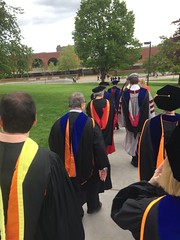
Faculty in academic regaliaA change like this could not occur overnight because there would need to be widespread agreement about it, and specific groups would need to be willing to radically change how they think and what they do.

I have worked in a professional academic school and led a program successfully through an ALA Accreditation review. I understand the impact that the Council for Higher Education Accreditation has on programmatic accrediting organizations like ALA, as well as regional accreditors like MSCHE. None of them will look at the idea I've laid out here with glee, because it changes the paradigm they live in. It could make them less relevant, which they would not like.

MSLIS programs will not be happy with this idea, because it would decrease their enrollments.  Some might successfully pivot to focus on those areas which would still need an advanced degree. Others might focus on providing those college classes that library workers would need to qualify for their positions. Some might focus more on professional development.  Some might turn their efforts away from libraries and more into information science (a trend that some believe is already occurring(. A few might become the places that educate future library educators.  (Yes, library educators would still be needed.) And, yes, some might close.  

Would the MSLIS totally disappear? I don't think so, but I do think it would be very different.

Remember to focus on diversifying the profession

We're struggling to diversify the profession and so we need to think differently.  We need to locate people from diverse backgrounds who have some interest in librarianship. We need to cultivate that interest in them and move them towards thinking about librarianship as a career. We know that there is a narrowing funnel between graduating high school and getting a master's degree, and that fewer people from diverse backgrounds make it through that funnel. So can we remove the funnel?

BTW our overall population trend in the U.S. is downward, which is why allowing people to immigrate to the U.S. is important. Fewer 18 year olds translates into fewer college graduates, etc.

We know that a stumbling block is the cost of a bachelor's degree, plus the cost of a master's, given the low salaries for many library positions. People are going into debt to become a librarian. Could this remove that stumbling block and make being a librarian a more economically feasible job choice?

No, I haven't lost my mind

Finally, no, I haven't lost my mind.  I start this thought process because of notes in old work journals, where I saw the same issues and ideas rising again and again in different conversations. I think that the only way of moving forward is radical change.

Yes, I have just laid out in this blog post ideas that you might really not like. That's okay. Perhaps the radical change that is needed to diversify librarianship is something else and not this. Whatever it is, we need to be working on it because it will take time to implement and have a real impact. And we need to start now.