Showing posts with label IMLS. Show all posts

Tuesday, October 13, 2020

Report: Public Library Survey Data: Some Answers, Many Questions

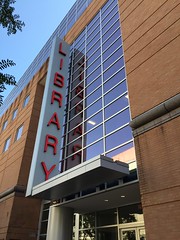
OCPL Central LibraryTwo years ago, the Syracuse University iSchool Public Libraries Initiative (IPLI) became interested in the IMLS Public Library Survey (PLS) data. At the time, the IPLI was doing some work on the data in conjunction with the EveryLibrary Institute. Seeing the data from every public library in our 50 U.S. states, the District of Columbia, and our U.S. territories raised questions in us. Exploring those questions took time and required adding some skills to our team, while also understanding which of our questions were answerable and how many were not. Fast forward and I have finally finished a 17-page report using the 2017 PLS data entitled Public Library Survey Data: Some Answers, Many Questions.  The report is available as a free-download.

If you work in a public library in the U.S., you might not even know that your library - through your state library - contribute to this huge data set, which is available for anyone to use. Yes, one row for every public library (main/central) library in the one data file, and one row for every library outlet in the other (i.e., branch libraries and bookmobiles).  Thousands of rows and dozens of columns. There is data about public library staffing, budget, services, and more. While there is much that this data can tell us about our public libraries, there are many questions that cannot be answered. Those unanswerable questions frustrated us and we tried to give voice to some of them.

Why care about this report?

I think you should read this report in order to look at U.S. public libraries from a different point of view. You are likely focused on your library or the libraries in your region. What if you took a step back and looked at public libraries more broadly? What could you learn?

One important lesson we learned is that public libraries have not documented their histories as much as we had hoped. One of our initial questions was, "Why have public libraries selected their specific legal structures?" Why, for example, is your library a municipal library and not an association library? Perhaps some libraries have documented their thought process or maybe the decision was made for them.  However, what we found important is that this history is not readily available and likely lost. This, by the way, was the impetus for Heather Elia's article entitled "The Do's and Don'ts of Documentation."

Report description

The federal Institute of Museum and Library Services (IMLS) collects and reports on key data points about public library activities, behaviors, expenditures, and staffing annually in the United States. Pre-COVID era data is important to interrogate and understand because the framework for the COVID-pivot starts with library activities on the day of the shutdowns. In the research paper in "Public Library Survey Data: Some Answers, Many Questions", Syracuse University Emeritus Professor of Practice Jill Husrt-Wahl presents a thoughtful discussion of the 2017 IMLS Public Library Survey data as more than past history. She writes, "Comparing this year, for example, to a previous year will tell the story of the negative impact COVID-19 had on some parts of the library, as well as the positive impact it had on other areas, such as ebook and database usage. Some libraries may use their data to point to the level of funding and staffing it would like to return."

In "Public Library Survey Data: Some Answers, Many Questions", Hurst-Wahl takes us through several data points to interrogate both the underlying reports as well as questioning the conventional wisdom about critical interrelated issues like the legal structure of public libraries, the staffing comportment of libraries, and the ways that properly-funded libraries express their mission, vision, and values. The crux of this discussion focuses on the role and importance of library staff, regardless of their job title or classification. "We know that this [IMLS] definition does not capture everything that public library staff does, especially considering both physical and virtual spaces," writes Hurst-Wahl. "This definition does not reflect the depth of community services that members of the staff provide." This report attempts to connect these dots and offers library leaders valuable insights for planning for success in a COVID-impacted world.

Thanks to...

Several people in IPLI helped me think through the data and I need to thank them: Heather Elia MSLIS '20, Deepak Sharma MSIM '20, Sabrina Unrein MSLIS '20, Georgia Westbrook MSLIS '19, and doctoral student Jieun Yeon, A big thanks to the EveryLibrary Institute - especially John Chrastka and Patrick Sweeney - for piquing my curiosity in this data and for publishing the report.

Additional Resources

  • The podcast T is for Training talked about this report on its Oct. 8 episode - show notes, audio link. The show notes include resources listed in the episode.
  • EveryLibrary Institute Library Funding Map
  • Measures that Matter - This is worth knowing about.  It is an initiative begun in 2016 to help coordinate a field-wide conversation around library data collection with the aim to develop and implement a related action plan.


Monday, July 16, 2018

IMLS report on Positioning Library and Information Science Graduate Programs for 21st Century Practice

In November 2017, IMLS hosted a meeting on "Positioning Library and Information Science Graduate Programs for 21st Century Practice." The 40-page report from that one-day event is now available.  The three overarching themes, and places for continued work, were:
  • Recruiting Students 
  • Educating Students
  • Recruiting, Hiring and Retaining LIS Professionals
It is important for us to remember that the diversity in our profession does not match the diversity in the U.S. For example, the U.S. is approximately 18% Hispanic/LatinX, while only 3% of our credentialed librarians are Hispanic/LatinX. The report includes tables on race/ethnicity on page 31, which use the ALA Diversity Counts statistics. 

I expect all of the ALA accredited MSLIS programs will be reviewing this report. It will be interesting to see how this influences their future.

Friday, July 13, 2018

#NDPthree report published: National Digital Infrastructures and Initiatives: A Report on the 2017 National Digital Platform at Three Forum

IMLS has published the report from its #NDPthree event in October 2017.  the one-day event reviewed work done as part of the digital library infrastructures and initiatives portfolio of the National Leadership Grants for Libraries Program and the Laura Bush 21st Century Librarian Program. The report - National Digital Infrastructures and Initiatives: A Report on the 2017 National Digital Platform at Three Forum - is 22 pages and provides summaries of the panel sessions and information on the overarching themes.  In the report, the themes for future work are (in alphabetical order):
  • Access
  • Collaboration
  • Community
  • Continuing Education
  • Digital Equity
  • Infrastructure
  • Preservation
  • Sustainability
I'm very pleased that I was able to attend #NDPthree and I'm glad this report has finally been released.  My six blog posts from the event may provide more detail or just give you another point of view. Below is a link to the YouTube recording of the event.


As you may know, IMLS has been under threat of elimination.  Its ability to pull together a broad range of people to think about topics like this and its role in providing funding to libraries and museums needs to be remembered, heralded, and protected.  If you find this report useful, let your voice be heard on why IMLS needs to survive.

Friday, December 29, 2017

2017 Year in Review: It was not what I expected

2017 has been quite a year.  I even I blogged more this year than I had since 2013!  Looking back at those posts, and what was happening elsewhere, this is what stands out to me:
  • It seemed as if the Library of Congress Copyright Office would go through an upheaval this year, but that did not happen. The Copyright Office still reports to the LOC and I've not heard any recent public discussions about moving it elsewhere.  Given how politics is infusing everything, the fact that the Copyright Office is staying as is, may be a good thing.  We don't need that office becoming part of a political jousting match.
  • Nothing happened in terms of updating the U.S. Copyright Law (Title 17).  Yes, there are sections that need updating and that updating requires deep thought, not just quick action. When the Congress does consider changes to the law, I hope they will do so without a political agenda and without undue influence from their major donors.
  • A phrase we are hearing every day is "fake news." One way of combating fake news is to providing reliable and verified information resources.  Thanks to libraries and other information providers who have placed reliable and verifiable information online for others to use.  Thank you for providing not just one side of story, but providing many sides.  Thank you for digitizing older information, which helps us put into context what is happening today.
  • Funding for many government agencies is in flux. That means that either funding has shifted away from them or there are rumors that they will lose funding.  Among those agencies is the Institute of Museum and Library Services (IMLS).  It is important that the IMLS survive and thrive. Why?  Quoting the IMLS:
    The Institute of Museum and Library Services is the primary source of federal support for the nation's approximately 120,000 libraries and 35,000 museums and related organizations. Our mission is to inspire libraries and museums to advance innovation, lifelong learning, and cultural and civic engagement. Our grant making, policy development, and research help libraries and museums deliver valuable services that make it possible for communities and individuals to thrive.
  • One of the ways IMLS helps all of us is by hosting events, where we can talk to each other about specific issues. One such event was held in October on the National Digital Platform.  We all should be grateful for those institutions who are willing to develop a digital platform which will help all of us.
  • This year Apple released its iPhone X, marking 10 years of increasingly sophisticated smartphones.  Smartphones and other digital devices are all around us. There are a growing number of wifi and bluetooth enabled devices.  An interesting activity is to count the number of wifi devices in your home.  (One friend counted 30!)  If you are surrounded by smart devices, then it may be hard to remember that is not normal for everyone.  Yes, there are people who are still using very basic flip phones.  And there are people who need to borrow wifi hotspots from their local libraries, so they can wifi at home.  There is still a digital divide in 2017 and there is still a need for digital literacy training.
Book cover for Science not Silence
Personally:
  • I had never marched in a protest before, but in 2017 I marched in four events held in Syracuse: The Women's March, the March for Science, the People's Climate March, and the Procession of Neighbors. The latter was in support of the immigrant and refugee communities in Syracuse. 
  • Out of my blog post about the March for Science came an invitation to be part of the book Science not Silence: Voices from the March for Science Movement, which will be released by MIT Press in March 2018.
  • I wrote a series of blog posts on Upping You Library Intelligence, which were well received. 
  • In collaboration with Copyright Clearance Center's Beyond the Book podcast, I released a blog post on library deserts which was paired with a Beyond the Book interview on the topic.  That blog post was  read over 3200 times making it my most read blog post of 2017.
Lastly, a one negative that is not attached to any one news event:
  • The feeling of not belonging.  That feeling swept over immigrants, people of color, women, and many others.  One good aspect of social media is that we have each been able to find a tribe online were we do belong, and were we can be supported.
I'm sure there is much more that I should be noting and likely your list would be quite different., and that is okay.  What will 2018 have in store for us?  Let's hope that it provides lots of positives!

Person jumping between 2017 and 2018

Wednesday, October 18, 2017

#NDPthree : Wrap-up

Yesterday's National Digital Platform at Three (#NDPthree) was an event that I wish all of you could have attended. Yes, there is the report, the seven-hour archived video (below), and the tweets, and there will be a report from the event. However, there is something about being "in the room" that cannot occur when you are at a distance.

In that room were some amazing thinkers. IMLS brought together people with different points of view and different library/museum situations, including a museum startup, a 501(c)3 academic library,  a tribal library, a broad range of academic and public cultural heritage institutions, library-related associations, and a few faculty.  Regretfully, a one-day event did not allow us to deeply tap into the wisdom of the room.

My big take-aways, at the moment, are:
  • The need to talk about libraries, archives, and museums using the word "platform."  In this meeting, we talk about libraries as a digital platform.  However, libraries are platforms for other things in our communities.  The word "platform" is a way for us to get away from talking about specific services and thinking about a bigger picture and different impacts.
  • The need for our cultural institutions to work together to build a platform, i.e.g, a shared way of thinking about an approaching our digital capability and capacity.  Working together means working across institutions types and sizes.  In means engaging the smaller institutions, so they are not left behind.
  • Some libraries and museums are developing creating approaches and "pushing the envelope."  What they are doing is not a secret, but most have not likely heard about it.  We need to get what they are doing known by more.  That might mean getting people to present webinars, speak at regional conferences, or write for our trade journals.
  • Funding continues to be important.  It is also important that funders be willing to take risks with their funds.  That may mean streamlining applications so that institutions can apply for funds more easily.  It could also mean providing funds to for-profit  cultural heritage institutions, who need assistance to preserve what they have and make that content more widely available.
  • We need to push for more open resources (e.g., software, platforms), which will help this effort.
  • We need to instill our MSLIS students with the knowledge and attitude which will allow them to be a part of developing, maintaining, and pushing forward the idea of libraries as a platform.  This means that students need to be able to:
    • Understand  and explain the bigger picture.
    • Have the technical language and knowledge to be able to participate in discussions and the development of solutions.  Technical knowledge does not mean that they need to be able to "do", but they do need to understand what is happening (or not) and why.
    • Relate what is occurring in for-profit organizations to the needs of our cultural institutions.
    • Create project plans and grant applications.
    • Track impact.
    • Collaborate across space and time with other organizations.  These collaborations could be with non-profit and for-profit entities in the U.S. and elsewhere in the world.
    • Act entrepreneurial by taking risks and be willing to work towards a l-o-n-g term goal.  
    • Be a part of the conversation, whether the conversation occurs in-person, through virtual platforms, or using asynchronous methods. Listening is a virtue as is providing your own opinion and knowledge.
Finally, I want to promote a comment made by Luke Swarthout (NYPL), who said (paraphrased):
If our work results that people can get to the Internet to view fake news and pop up ads, then our work is not done.
Here are links to all of my #NDPthree blog posts:

Tuesday, October 17, 2017

#NDPthree : Going Forward

Ashley Sands, IMLS - Moderator

This panel was asked to look foward.

Kate Zwaard, Library of Congress - she works in the National Digital Initiatives Division
She has four broad points (her ideas):
  1. Modern manuscript collections - ephermal manuscripts in ephermal media.  The platforms are evolving faster than we can understand how to archive them.  Personal digital archives is part of this.  Education is not the answer.  There needs to be a tech solution.
  2. Libraries as Platform - We need to involve users more centrally in conversations about this. Are we presenting data in ways that are useful.  New or complex metadata standards are barriers to use.
  3. The problem of scale - As we scale up, how do reconfigure the structure of our institutions and our field to support this.  How can collaborations occur in a peer to peer basis?  How do we blend the wisdom of cataloguers, the wisdom of the crowd, and technology?
  4. Skills building and our patron base - She notes a benefit of demonstration projects and the need to promote the work that is similar to what are users are doing.
Loretta Parham, Atlanta University Crnter Woodruff Library - She talked about the progression of projects.  A small digital project to a larger one to preserving institutional digital records to scholarly record to audio/video digitization to a project for GLAM (galleries, libraries, archives and museums).  Working to create object-based learning pedagogy.
In terms of need, need IMLS to exist and to thrive.  Need grants to smaller and minority institutions.   Small institutions need help acquiring skills that they do not have in house.  Institutions need help understanding how to reorganize to take advantage of opportunists.  Need conferences/events where like institutions are the majority of the attendees.  Continuing education is important.  The effectiveness of collaboration needs to be taught.  They need help in policy development, especially with born digital and records management. They need the support of public programs so that content is used.  

Chris Bourg, MIT - The biggest ROI is on shared solutions to shared problems, e.g.,  community source software development.  The challenge is that you need expertise in staff during the development.   Be willing to let go of an obsession with quick wins.  Be willing to make long term, patient investments. We need to invest in ways to make our content usable in ways we cannot anticipate. MIT is making hackable libraries, which means people can use them how they want to use them.  Finally, what are the challenges that libraries have and how can others help?  For example, MIT imaging technology that can read through closed books.  Right now the tech can only read through nine pages.  How cool would it be to digitize books without opening them?  Having that in portable technology would be a game changer.  

Cliff Lynch, CNI - He noted the report that IMLS produced on the “National Digital Platform at Three.”  He sees similarities between what IMLS is doing/funding and other efforts (e.g., DPLA).   What is on the cusp of big wins?  He mentioned several things including open educational resources (OER).  Concerns? Sustainability.  Small institutions with limited resources.  Privacy.  The life cycle of scholarly work.  Big data and especially in museums and scientific collections.  Preservation, e.g., ebooks.   News archiving.  Social media and personalization.  Do we need to rethink how we do archiving in these areas?  In the move to digital, libraries are systematically getting squeezed out of content.

Q&A:
Jim Neal - The impact of policy issues that are or will be made at the federal level, e.g., copyright, privacy, network neutrality, etc.  Not to speak of federal funding for libraries. 
Cliff - What Jim said! The NDP can have an impact on these issues.

Question - The need for communities of action.  We need investment of time and resources. However, funding for those cannot currently occur though grants.  How can we encourage the funding landscape to change to meet our needs?
Chris - It is a sociological conundrum.  We need to be clear about vision and mission, and use those to build trust so people will work together for a common purpose.  However, we don’t have a common agreement on what our missions are.  We are in the middle of disruptive change.  If your mission is to serve your primary community, you will need do the things your community needs for the long term.

Kate - We need to come together with a shared goal and purpose that is achievable.

Cliff - Reuse of data is overly simplified.  Some data cannot be made open.  Libraries are often uncomfortable with content whose sharing must be limited.  
Katherine Skinner - We do not have funding for the glue.  For that which will hold us and our collaborative efforts together.  

Mark Parson - The successful networks are tied to big infrastructure.  What can we do to insure that all data networks are tied to infrastructure?
Erin - People love core facilities.  Most research core facilities are domain specific.  Libraries cross disciplines.  What would a core facility for libraries look like?  How could we do?

Kate - She noted the importance of ebook usability. It is what she believes our users would want us to work on.  

Ashley - How do measure if something is sustainable or not?  
Cliff - Sustainable to some extent is related to up-take. If enough people are using something, we can figure out how to sustain it.  How do you predict sustainability in advance?  Many funders struggle with this.

Loretta - We sustain a lot of stuff that we should not be sustaining.  We need to change what we’re doing.  

Chris - We have no idea what the sustainable business model is for open access publishing.

Kate - We need to turn things off when they need to be turned off.  We all have a pilot that last too long.

Ashley - What is. A grand challenge that is pressing?

Chris - Digital preservation

Kate - Getting the word out about our collections

Loretta - Isn’t someone working on a list of all these things?  

Chris - MIT is going to have a summit on what the grand challenges are and develop white papers. Open scholarship, digital preservation, and discovery.  Imagine a discovery device that mimics how we think.

Comment - Metadata and discovery.  Linked data.  Interoperability.

Question - We spend a lot of time looking at discovery.  It isn’t about discovery, but about getting to that “thing.”  It is about getting to stuff, which is in different systems, networks, etc. what do we call this?  It is the same problem as the number of clicks to download an ebook.
Chris - Known item searching. The sense of anxiousness that faculty are missing things related to their research.  Can you help me find what I don’t know I’m looking for?

Loretta - Can the information find you?

Chris - How do we do personalization and still respect privacy?

Ashley - one more remark...

Kate - It has been an insightful day.

Loretta - How do we make mileage on solving some of these thing?  Let’s not forget those with limited resources.

Chris - How can we use our resources for the public good, but in a way that allows for the library to center itself and its perspective?

Cliff -  We spend a lot of time worrying about improving technical skills.  We also need to deal with imparting the judgment and knowledge about how to make decisions about the responsible use of technology.

Concluding Remarks: Robin Dale, IMLS
  • She noted the importance of our input, questions and answers
  • Glad to see familiar face and thrilled to see new voices and hear new voices
  • What’s next?
  • Grand challenge?

A report due in early 2018.

#NDPthree : Museums and the National Digtal Platform

Paula Gangopadhyay, IMLS - Moderator
Museums and libraries have their similarities and uniquensses. There are some different IMLS grants for museums. In 2017, that received nearly 900 grant applications.  Two priorities: professional development and digital projects. 70% of the grant recipients have been art museums. A high percentage of those (40%) are around digital asset management.  However, the vast majority of small and mid sized museums are behind the curve.  She noted three challenges including the absence of a skilled workforce. There is a need to collaborate across sectors. 

This panel was more free flowing.  The panelists were:
  • Greg Albers, J. Paul Getty Trust
  • Samantha Blickhan, Zooniverse and Adler Planetarium
  • Michael Edson, Museum for the United Nations 
Where have you seen the biggest ROI for museums services in the last three years?
Samantha - They are offering support to museums in building crowd sources projects.  The biggest ROI is the application of digital tools in unique ways, such as in accessibility.  Visualizing data in new and specific ways, e.g., dome-casts in planetariums. They want to get to a place of being software neutral.  In terms of Zooniverse, she talked about a project builder that allows more projects to be built.
Greg - What came to his mind was the word “open.” Open access.  Open data.  

Michael - A move from focusing in technology to focusing on social impact. How do you put tech to use for something that matters.

Samantha - How do you create tools that support the use of data/digital assets?

Michael - Need to use the word “platform” more broadly. He pointed to Zooniverse an their work to help people do work faster and at scale.  Good technology is rooted in good human interactions.

Greg - It is hard for museums, etc., to compete for staff with for profit companies.

Michael - People - perspective employees - need to see cultural heritage institutions  as places that is making a difference.

Michael - What are the super practical things that have changed? 

Greg -There is an understand of what makes up a digital museum, although smaller institutions cannot do it.

Samantha - One institution has a VP of user experience.

Michael - It used to be “illegal” to talk about Wikipedia in museums, but not talking about Wikipedia is normal.

Where do you see the biggest gaps, needs and challenges over the next 3-5 years?

Greg - The capacity is people.  He is interested in top to bottom digital literacy at the Getty.  People who are focused on the digital are throughout the institution. Because they are spread out,they are not good at talking to each other.  They share baseline skills and a language for talking about things. Literacy can include being aware of “X.” The digital share is a full day staff retreat.  All people focused on the digital come in the spring and must share.  (You can come, but you must share.)  All people need to have a shared understanding.
Samantha - Zooniverse worked to produce data and analysis after Hurricane Irma.  Great work that needed more publicity.

Greg - People are willing to share, but the institution needs time to do the sharing.

Greg - How does the Getty decide what to do? Now have a VP level digital content person, who has a team of digital architects, including metadata creation.  They are updating their governance model in recognition of the digital work they are doing,

Paula - Some of the work Getty is doing could be scaled down and be used by smaller institutions. Digital is not the responsibility of one person or one department.
Michael - Step 1 is that someone somewhere in the organization is focused on digital.  Step 2 is that a department somewhere  in the organization is focused on digital.   Step 3 is that the department in charge of the organization's digital presence/content has been more purposefully selected.  Step 4 is that there is someone in upper level management who is focused on the organization's digital content/life.

Samantha - The Department of Citizen Science is also where teen programs are housed.  This means that design and use are in the same department.

Greg - When a smaller institution can’t grow to build a department, it needs to look for cross fertilization.

Michael - Do what you do best and network the rest.  Are there members of your audience who are doing what you need to do?

Q&A:
What are the intellectual property issues?  
  • Greg - Look for low hanging fruit.  It is becoming more acceptable to put things online.  Take advantage of Fair Use.  
  • Samantha - Doors open when you start with the access that you have.  Show what happens - positives - when you provide access.
What are some of the opportunities and resources that museums should be leveraging?
  • Michael - Super serve your niche.  Focus on basic access and basic service.  How do our museums help us make good decisions about our future?
  • Samantha - Talk to your user base because they are the ones using your collections/projects. You have to give them the opportunity to share their ideas.
  • Greg - We need to connect with each.  Both in connecting with people and interoperability. 
How do you assess where your social impact is? 
  • Michael - Sometimes the last e where the social impact will be is baked into the project.  Where will meaningful change occur?  Most change happens in small local groups, not online.

#NDPthree : Opening Scholarly Communications


Ashley Sands, IMLS - Moderator

This conversation was mostly on gaps.

Ixchel Faniel, OCLC - Comes to this as a person who studies research data management issues.  (1) Continued education for librarians an archivists - There have been studies on this in Europe, Australia and the U.S.   Librarians are interested in this.  Existing staff are being repurposed and they need the correct training. There needs to be an investment and a clear return in investment. There needs to be a more concerted effort conceptually. (2) Meeting researchers needs - Expect to see a big return here.   Expanded data and new methods of collaboration.  Sharing data and reusing data.  How do activities in the data life-cycle influence each other?  We need to consider the full life-cycle. What and who are touching the data?  What is the result of those touches?  How are downstream activities impacted?

Mark Parsons, Rensselaer Polytechnic Institute - He comes from a data perspective, although new to RPI and IMLS.  He is skeptical of the term “scholarly communications” although he likes the broad definition in the NDP report.  Infrastructure is a body of relationships.  Libraries and museums are mediators and thus part of the infrastructure.  In terms of mediation, we are not done until people can use the data to improve their lives. We need to focus on users and providers.   Mediators need to work from different perspectives. We need radical collaboration and radical trust.  We need to develop standards.  He believe the big gap is around economics.  Scholarly communications needs reciprocity.  We need to share.

Merce Crosas, IQSS, Harvard University - IQSS develops tools which help in research. They help with data management, FAIR data plans, data citation principles.  (1) building communities - Bringing together the users and e developers.   (2) supporting larger data sets -These needs to be done in the cloud. Your work will be in the cloud. It could be an open cloud.  (3) supporting sensitive data - Sensitive data sets exist now.  How can they be made usable?  What privacy tools are needed? (4) intregration of the data life cycle - It needs to be easy and interoperable. 

John Wang, University of Notre Dame - Example of a book that included multimedia.  Researchers are incorporating various data/artifacts in their work.  How do you preserve these materials?  How do you assure continued access?  The problem of interconnected objects.  Preservation is often an afterthought.  Many faculty do not understand that librarians can help solve these problems.  And they do not engage librarians early enough in the process.

Sayeed Choudhury, John Hopkins University - From innovation to impact.  Think of return on impact, not just return on investment.  The infrastructure is invisible until something goes wrong.  If someone uses data in your institution without your help, that is impact.  If someone uses data in unanticipated ways, that is impact. One way of having impact is to use as librarians what others have created.  He noted that using content is continual and creation is continual, which causes problems and concerns.

Q&A:
Ashley -  What is the most pressing problem or concern?  
  • Sayeed said that IMLS has a probing of view that no one else does. What is IMLS seeing? 
  • Mark’s answer was trust.  Can IMLS help to steer the conversation in the academy, especially in terms of what publications are (format) and how they are rewarded? 
  • Ixchel wondered how we work collaboratively.  What changes are needed?  
  • Merce said that IMLS needs to recognize the changing output of funding efforts.
Comment - In the arts - digital arts - some of these topics have already been discussed.  Can we learn from them? 

John - There are different ways of thinking about value that occurs much further upstream.  We cannot plan for the unanticipated, but we can facilitate it.

Emily - Have you had success in working outside the library environment?  What was needed? 

Mark - You need lots of time to build relationships and trust. You need to make a commitment. 

Merce - Spoke about collaborating across cultures and borders.  Everyone needs to have some sense of ownership.

Roger Schonfeld - He noted the breadth in the definition of scholarly communications.  For profit investments in end to end scholarly communication workflow. Is it less about communications than research workflow? John’s answer spoke to partnership.

#NDPthree : Expanding Digital Cuttural Heritage Capacities

Emily Reynolds, IMLS - Moderator

The overarching questions in the session were "What has made a difference?" and "Where are the gaps?"

Bergis Jules, University of California, Riverside - Talked about the forum that is getting a diversity of voices at the table to discuss community archives and preserving local cultural heritage. These forums are creating new space for new voices.  The forums help to broaden knowledge.  They also help to envision radically inclusive processes for the field.  What they have learned has not yielded any surprises.  Mostly about funding and labor.

Karen Cariani, WGBH Educational Foundation - Return on investment: Two page submission form which helps in a number of areas including collaboration.  There is more support for collaborations. She noted that some of the tools needed already existed, e.g., open source speech to text tools. Benefiting from the work in NLP (natural language processing) and efforts of linguists. National Digital Stewardship Residency (NDSR) programs are benefiting young professionals and host organizations. Trying to give more knowledge and experience to the next generation of professionals. Local collections have the biggest gaps - they need funding for digitizing and digital preservation. Another gap is that computational researchers are used to biggest funding and they see the IMLS grants as being too small.

Thomas Padilla, UNLV - His project is trying to think through how to make collections computational amenable.  It is a broad area that could have far ranging impact.  Gaps:
  1.  Need programs to help existing professionals to build the knowledge and skills needed in this area. What can be done to encourage local organization success? 
  2. Need to encourage projects that are cross disciplinary and with different orientations?  How can we go for the difficult wins, not just the easy ones?  
  3. More collaborative funding opportunities and opportunities that are international.  Can we have private-public sectors exchange of staff, so we can learn from other private sector colleagues (e.g., Twitter)?
Jefferson Bailey, Internet Archive - (1) Noted the importance of systems interoperability and the need to have funding that seeks pieces that are able to work together.  We need glue rather than spokes. The need to promote data exchange through APIs.  There are industry technologies that could be adopted for the needs of digital cultural heritage.  (2) There has been success in collection development and we need to continue to think locally, as well as collection building in new domains (e.g., Twitter) and fast moving events.Risks:
  1.  Grant funding around big projects with established institutions.  Funders need to take more risks with their funding.  
  2. Need to lower the barrier of entry.  
  3. Shared infrastructure beyond the application layer, e.g, storage.  Could we have a non-profit cloud?
Q&A:
Emily Reynolds - Question about funding models.  Bergis said he has no specific solutions.  What if funding targeted specific opportunities, rather than a general call for applications?  What if funding was available to those who are non-profits? He mentioned a Native American boarding school with tremendous archives, which needs help in preserving their collections. Karen said that when you include smaller institutions in your grant, it takes time to manage the efforts of those smaller institutions.
Comment - Comment about the trust factor needed.  Smaller institutions may not immediately trust.

Question - Large cultural institutions don’t always have the ability or motivation to step up.  Yes, larger institutions should help smaller ones, but they also need to help themselves.  Do they have enough institutional support?  Thomas said he doesn’t know what the solution is that provide larger institutional support.  Need to create and support new positions in emerging areas.
  •  Karen said that they are an organization between a bigger one (Library of Congress) and smaller institutions.  How do larger institutions be more than users of the smaller institutional collections?  
  • Jefferson - Can there be cost sharing?  Can larger institutions provide the capacity and smaller institutions provide the expertise?  
  • Thomas -What does big and small mean?  Some smaller institutions have having an incredible impact.
 Rhiannon Bettivia - Comment - Metadata and data model. There is a cost and need to structuring the data.

Emily - The need to create our own Amazon web services for libraries.  

Bergis - Who legitimizes our history?  Who ensures that history is preserved?  We need to broaden who is part of the conversation and what is preserved.  We need to be radically inclusive.

#NDPthree : Building Equitable Digital Communities

On Oct. 17, 2017, the Institute of Museum and Library Services (IMLS) held a one-day event to discuss the National Digital Platform, review efforts to increase the digital capacity of libraries and museums which have occurred over the last three years, and look towards to the future.  Approximately 85 people attended the event in-person, and many others attended through a livestream or followed the event through Twitter (#NDPthree).  In the room were an amazing group of people from libraries and museums.  It was an impressive group, in terms of knowledge, that was quite willing to engage and share.  Everyone had received the NDP at Three Report, which provided a backdrop for the live discussions.

There will be a report from this one-day event and I believe it will be issued in early 2018. If you are interested in contributing your thoughts to the discussion, consider doing so through Twitter.   I wrote five blog posts about the event and I will admit that I did not - could not! - capture everything.  So these posts are a snapshot.  Perhaps they will spark you to want to know more or engage these people in a deeper conversation.

Event Welcome:  Kathryn Matthews, IMLS
Where have we succeeded and progressed?  Where does additional work need to be done?  Where do we need to be collaborating?  What should IMLS be doing in this area?
Time to look back and look forward.

Overview of NDP: Emily Reynolds, IMLS
The NDP represents the combination of software applications, social and technical integrations, and staff expertise that provide digital content, collections,and services to all library and archive users.
Approximate $11 millions in funding for each of the last three years.  However, over those years the number of grants has increased, meaning that the funding is being spread further.  Trends:
  • Building equitable communities
  • Expanding digital cultural heritage capacities
  • Opening scholarly communications 
She highlighted the following projects out of 111:
  • Design for Diversity, Northeastern University Librsries
  • ePADD Phase 2, Stanford University 
  • Creative Commons Certificate for Librarians, Creative Commons
Overarching questions:
  • Where have you seen the biggest return on investment in NDP funding in the past three years?
  • What do you see as the biggest gaps, needs, or challenges for advancing NDP over the next 3-5 years?
The day will be comprised of five panel discussion.

N.B. - At this meeting were James Neal and Jim Neal, both librarians who finally met each other in person at this event.  You will see both names in my notes.

Building Equitable Digital Communities 
James Neal, IMLS - Moderator

Bonnie Tijerina, Data and Society - The growth in privacy and intellectual freedom concerns. Worked on a collaborative project in NYC. Trained hundreds of staff in the NYC area.  Attracted the attention of the NYC mayor, which brought attention to the role of libraries in this area. Guides, etc., are being used by other libraries across the U.S. Privacy needs to be part of grants and efforts growing forward because of its importance.  Are our products and services adhering to our patrons’ privacy needs?

Sharon Strover, University of Texas at Austin - Has done research on hotspot loan programs.  What does access mean for library populations? What is the return of investment?  Where do people go for access: library, McDonalds, WalMart?  Borrowing a hotspot gives people access like others have. In rural areas, libraries are a key part of the infrastructure.  In rural communities, libraries need to work with others such as schools or statewide tech service centers in order to be successful.  She talked about the importance of erate, but noted that not all libraries are able to take advantage of it.  She also mentioned the role that private businesses play in this area.

Don Means, Gigabit Libraries Network - Libraries as early adopters.  Fiber to the library has allowed for the growth of libraries to provide WiFi.  Look at http://giglibraries.net for additional info and data.

Luke Swarthout, NYPL - Talked about work to address the ebook market and making it better for patrons.  There is a user experience problem. For example, too many clicks to download a book. Libraries as owners of the patron relationship.  Libraries do not currently decide on the patron’s relationship with ebooks.  Libraries need to own the infrastructure.  Referenced IMLS 2012 report on digital inclusion.  He noted that the report is his “favorite thing.”  If our work results that people can get to the Internet to view fake news and pop up ads, then our work is not done. So... the user experience needs to be better.  We need to build the tools to control how libraries interact With their patrons.  We need to get ebooks and digital content in more hands, not just for those who are well off.  
Kelvin Watson, Broward County Library - We need to focus on partners who can help create standards.  He noted a gift of tablet computers given after Hurricane Sandy, but that the gift came with no internet access.  They coupled those with the lending of WiFi hotspots and saw an increase in the number of loans.  His examples demonstrate his belief in collaboration. He talked about lending devices which have apps on them that help people interact with the library.  He noted the need for standards that transcend vendors.

Q&A:
Jim Neal - Comment around economics and preservation.  Luke noted the need to talk with publishers about economics.  Also talked about the need to think more about preservation of digital books. 

Question - Using the current state of Puerto Rico as an example, asked about WiFi and digital white space.  Don noted the need to design for portability and rapid redeployment.  In Sharon’s work, they were looking at hotspots that use cell service.  Don’s project is not using cell service, but radio frequency.
Question (from a tribal library in southwest New Mexico) - Not easy to get college textbooks in ebook format.    

Question - How are librarians prepared to teach digital literacy and privacy?  Bonnie talked about the curriculum they created.  Foundational learning. Need to understand how the internet works to then understand how to protect your privacy and data.  Curriculum and more at DataPrivacyProject.org